
A Complete Guide to the Most Common Air Compressor Types
Once you determine the correct compressor capacity for your facility, the next major decision usually comes down to choosing between piston air compressors and rotary screw compressors. Your selection should be based on your application, air quality requirements, and long-term operational needs.
HOW TO PICK AN INDUSTRIAL COMPRESSOR

A Complete Guide to the Most Common Air Compressor Types
Once you determine the correct compressor capacity for your facility, the next major decision usually comes down to choosing between piston air compressors and rotary screw compressors. Your selection should be based on your application, air quality requirements, and long-term operational needs.
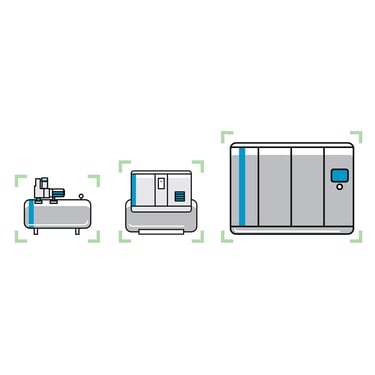

what compressor size do I need?
Choosing the right air compressor size is crucial for ensuring efficient and effective operation. The size of the compressor impacts its performance, reliability, and suitability for specific applications. Key factors to consider include airflow, pressure, and the specific requirements of your tools or machinery.
Key Factors When Evaluating Air Compressor Types
When researching and comparing different compressed air solutions, consider the following:
Specific application and industry requirements
Airflow utilization (CFM / FAD)
Required operating pressure
Air quality needs and dryer/filter configurations
Daily operating hours
Fluctuating air demand levels
Future expansion or system upgrades
These factors ensure you choose a system that delivers efficiency, reliability, and the lowest total cost of ownership.
Piston (Reciprocating) Air Compressors
Piston compressors remain one of the most economical options on the market. They are simple, durable, and widely used in workshops, body shops, tire repair centers, and light manufacturing facilities.
Advantages
Low initial investment
Simple operation and easy maintenance
Suitable for small businesses and intermittent use
Limitations
However, piston compressors operate at only 50–60% duty cycle, meaning they should run 30–35 minutes per hour with mandatory cooling time. Without proper rest between cycles, overheating and mechanical failures become likely.
Other considerations include:
High noise levels during operation
Higher downstream oil contamination, which may cause issues for equipment that requires clean air
Not suitable for continuous operation or demanding industrial environments
Because of these limitations, piston compressors are best for intermittent, low-to-medium demand applications.
Rotary Screw Air Compressors
Rotary screw compressors are ideal for facilities requiring continuous, stable compressed air supply. Designed for 24/7 operation, they offer a 100% duty cycle, making them the preferred choice in industrial plants, manufacturing, food processing, and automation environments.
Key Advantages
Reliable, continuous operation
Quieter performance compared to piston compressors
Available in fixed speed and variable speed drive (VSD) models
Option for integrated air dryers and filtration systems
Compact tank-mounted versions for smaller facilities
Highly efficient for medium-to-large compressed air systems
With plug-and-play configurations, especially when combined with integrated dryers, installation becomes straightforward and cost-effective.
Variable Speed Drive (VSD) Compressors
VSD technology is the premium choice for companies focused on energy efficiency and reduced operating costs. Although the initial cost is higher, these units often pay for themselves due to significant power savings.
Why VSD Compressors Stand Out
Adjust motor speed based on required airflow
Reduce energy consumption by up to 60%
Ideal for facilities with fluctuating air demand or multiple shifts
Minimize wasted electricity during low-production periods
Come with advanced monitoring, smart controls, and performance analytics
Lower maintenance costs and improved system reliability
VSD compressors are becoming the industry standard, especially in regions where energy efficiency and operational savings are top priority.
Fixed Speed Compressors
Fixed speed compressors operate at a single, constant speed throughout the day. Although less efficient than VSD units, they are a solid choice for facilities with:
Very stable air demand
Continuous, predictable workflows
A need for constant pressure and airflow
While not as flexible as VSD systems, they still outperform piston compressors for heavy-duty or full-time operations.
Choosing the Right Compressor Size
Selecting the proper compressor size requires evaluating:
Pressure (PSI / bar): Determines the force needed for your tools or applications.
Flow (CFM / FAD): Determines how quickly tasks can be completed and whether the compressor can support multiple tools or machines.
Undersized or oversized systems can cause energy waste, performance issues, and unnecessary equipment wear.
Oil-Injected vs. Oil-Free Compressors
Both piston and rotary screw compressors are available in oil-injected and oil-free designs.
Oil-Injected Compressors
Use oil for lubrication and cooling, resulting in minimal oil carryover. Suitable for:
Manufacturing
Automotive
General industrial use
Oil-Free Compressors
Provide 100% clean air, meeting strict international standards, and are recommended for:
Food & beverage
Medical and pharmaceutical
Electronics manufacturing
Clean production environments
Choosing the right option depends on your air purity requirements, regulatory standards, and equipment sensitivity.
Final Thoughts
Selecting between piston and rotary screw compressors—and between VSD or fixed speed models—depends on your:
Operating hours
Air quality needs
Budget
Future growth plans
Required pressure and airflow
With technologies evolving in compressed air systems, choosing the correct machine can significantly improve your facility’s efficiency, reliability, and energy consumption.